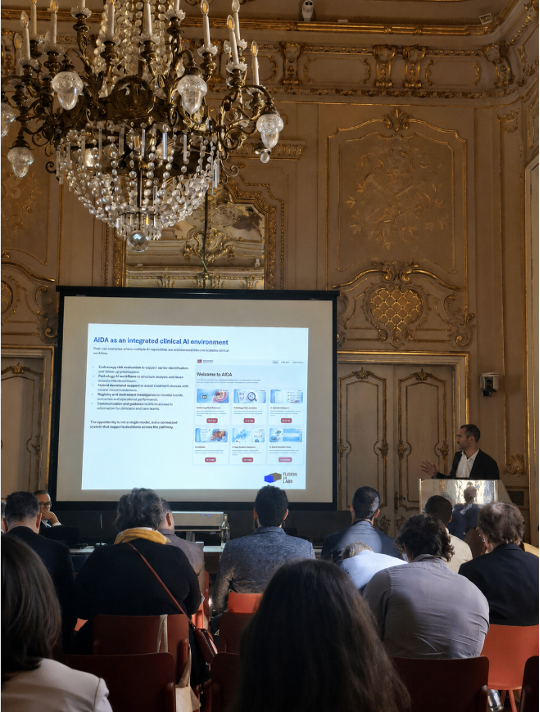





The AIDA consortium was proud to join the digestive cancer community in Munich during the 2026 edition of the ESMO Gastrointestinal Cancers Congress (ESMO GI 2026) and the DiCE Masterclass, two key events bringing together clinicians, researchers, patient advocates and healthcare professionals working to improve outcomes in digestive cancers.
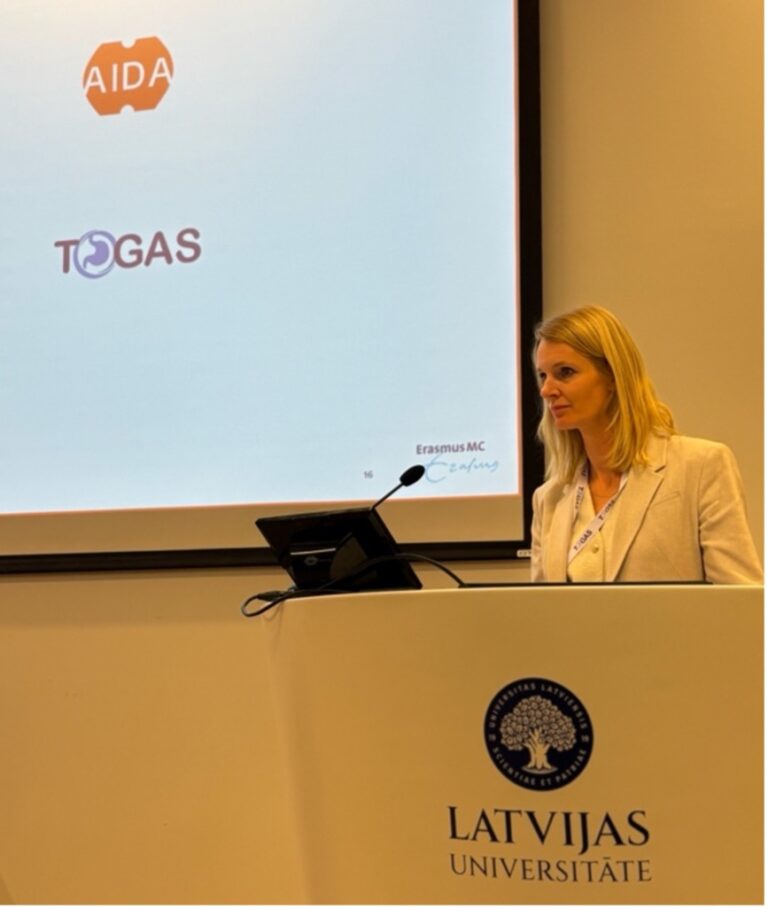
One of the highlights of the week was the participation of Prof. Tania Fleitas-Kanonnikoff, Principal Investigator and Coordinator of the AIDA project, who delivered a presentation during the DiCE Masterclass focusing on innovation in gastric cancer prevention, early detection and patient care.
Her presentation showcased how multidisciplinary collaboration and artificial intelligence-driven tools can support healthcare professionals in identifying patients at risk of gastric cancer and implementing more personalised prevention and management strategies. These efforts align with AIDA’s mission to improve decision-making processes and contribute to earlier diagnosis and better outcomes for patients across Europe.
Beyond scientific exchange, the events also provided an opportunity to strengthen the dialogue with patients and citizens. At the DiCE booth, Prof. Fleitas-Kanonnikoff shared a message on behalf of the AIDA consortium that resonated strongly with participants:
“Exercise and a healthy lifestyle are a must to prevent cancer.”
This message reflects one of the core principles of cancer prevention: while innovation and technology are essential to advance healthcare, lifestyle interventions remain a powerful tool to reduce cancer risk and improve long-term health outcomes.
The message also perfectly captured the spirit of the DiCE Fun Run & Walk, an initiative that brought together participants in Munich to promote awareness, prevention and healthier lifestyles in digestive cancers. By combining science, community engagement and advocacy, the event highlighted the importance of empowering citizens to take an active role in their health.
As AIDA moves towards the final stages of the project, the consortium remains committed to bridging cutting-edge research with meaningful societal impact, ensuring that scientific innovation translates into tangible benefits for patients, healthcare systems and European citizens.